
First Light
by Jason Allen
We crossed the river in the rainy haze of my headlights, with the wipers swishing on high. Traffic in the opposite lanes of the Burnside Bridge kicked up clouds of mist and passed by distorted and vague, as though my truck windows had all been coated in Vaseline. The city beyond the bridge registered as nothing more than blurry strings of Christmas lights and shadow.
I glanced at my younger brother Jess in the passenger seat. His eyes had closed again and the coffee I bought for him had begun tilting away from his lap.
“Hey,” I said. “Don’t let that spill.”
My fingers clamped over the top of the steering wheel. I had to lean so far forward to gage the distance from the taillights of the eighteen-wheeler in front of us that my forehead nearly touched the windshield. It hadn’t rained at all last night, and yet there I was, focused on not hydroplaning in those extra dark moments just before sunrise, driving my only brother to Hooper Detox Center in the middle of a damn monsoon.
#
On the east side of the river we hit red light after red light, until finally I gunned it left between oncoming cars and then hooked around to double back to MLK. I hadn’t slept a wink for the past twenty-four hours, not since I realized Jess had swallowed enough pills to vanish into the mineshaft of a blackout. He hadn’t admitted yet that, along with the pills, he’d also shot heroin all afternoon in my apartment before I returned home. I wouldn’t piece together the full story for days. I hadn’t even realized yet that he’d overdosed.
His eyes opened halfway as he turned his head slowly to face me. Then he raised his cup and grinned. “Here’s to feeling good all the time.”
That had been my line, back when I used to slam shots with friends around kitchen tables or on porches or with strangers in bars. My line, back when I numbed my anxiety and deepened my depression with every available form of alcohol. Back when I tried to ignore the sense that so many potential disasters were looming within squinting distance. And now Jess was strung out beside me at dawn, parroting my twist on saying cheers, my gallows line. Here’s to feeling good. All the time.
I turned down another side street and crept alongside the seemingly endless column of parked cars. The first hints of sunrise added only dabs of gray to the lowest sliver of sky, while the heavy rain pummeled the roof and hood of my truck and kept the visibility to a minimum. I needed to find a space and stop driving.
“Keep an eye out for any parking lots,” I said, leaning even closer to the windshield. “I’m willing to pay for a spot at this point.”
I glanced to the side.
“Jess, you still awake over there?”
“You know it, big bro.”
“Help me look for a space, alright?”
He bent forward.
“I can’t see anything. I don’t even know how you’re driving.”
“Just try to keep your eyes open,” I said.
And in the silence that followed, I realized I’d been talking mostly to myself.
#
Not a drop of rain had fallen last night, and yet there we were, raising our hoods and jogging away from my truck in the midst of a full-on storm. At the corner of Northeast 3rd and MLK the glass doors to Hooper Detox Center were still locked, and outside the nondescript brick building we found no shelter from the rain, not even a hint of an awning or overhang. A ragged group of sleepy-eyed addicts and alcoholics paid no attention to us stepping up from the curb as they milled around in front of the doors and along the sidewalk.
For the next few minutes, Jess and I and those ten or twelve mostly hooded figures stood and shuffled around that rectangle of concrete like figures from a Samuel Beckett story. Waiting for Godot. Waiting for God. Waiting for a clinically administered fix. Everyone, myself included, hunched and bundled and pivoting away from the shifting squall. One guy with deep grooves in his jowls gripped a sopping red blanket around his shoulders. Another wore an ankle-length trench coat and peered through holes in a plastic supermarket bag that he’d pulled over his head. Another had rigged two black garbage bags with cuts for his arms and legs to fit through and secured them at his waist with a bungie cord as the belt. As primitive as their makeshift raingear was, the garbage bag man and the others had more protection from the weather than me, and I envied them for it.
The rain caught another gust and slammed me sideways. My thoughts shifted to the nor’easters and tropical storms that battered Long Island throughout the 80s and 90s, and to one autumn afternoon during the onset of a hurricane, when Jess and I were teenagers and I drove us around an unmanned police barrier at the base of the Ponquogue Bridge. I knew I would never forget standing in the dunes and shouting into the wind as giant waves exploded like dozens of Claymore mines along the shore. And now I had that same feeling in the blinding rain outside Hooper. I knew I would never forget any of this.
Jess and I may have been 3,000 miles away from the seasonal storms of the Gulf Stream that we’d grown up with, but even so, the wind whipped the glass doors and rattled the panes with almost as much force as the hurricanes I’d known. Rainwater streamed down my hand and dribbled into my mouth each time I sipped my coffee. Every scrap of my sweatshirt and jeans had already soaked through and weighed me down like a suit of chainmail. Even my underwear had been wicking water from my dripping shirt tails and back pockets for long enough by then to sag and squish whenever I shifted my weight.
I finally surrendered, leaned my head back and closed my eyes.
Things could be worse, I thought. Jess could’ve died last night.
#
Someone was supposed to have unlocked the doors at 7:30. Five minutes ago.
Soon, I thought. They’ll open up any second now. They’d just better have a bed for him. Otherwise, I’m afraid he won’t make it through the day.
Jess nudged my shoulder and leaned closer, as if to tell me a secret, though his words were mostly swallowed by the wind. So I could barely hear him say, “Hey, man. I’m really sorry.”
“It’s all right,” I said.
I knew by the hangdog look that he was sorry for a lot more than yesterday’s drug binge and the miserable wait in this apocalyptic weather. As brothers, we’d had a rough run for the past couple of years. But the past no longer mattered. None of it. All that mattered to me anymore was for Jess to live.
Aside from Mom, my brother had always been the only close family I have. I lingered on that thought, wiped the water from my coffee cup lid and tilted my head back for a long pull, completely aware that the caffeine wouldn’t work any miraculous effect. My eyes squinted down to slits. I looked at Jess and then stared along with him at the traffic passing by on Martin Luther King Boulevard. Soon enough I lost my bearings in the rhythmic sound of water peeling away from tire treads, a sound that triggered an image of a chorus of grandmothers in a movie theatre, all fifty or sixty of them with one finger pressed to their lips, telling us over and over to: “Shushhh… Shushhh… Shushhh…”
Drifting farther from the detox center and its locked doors, I entered a mashed-up memory of all those trips we took to Cape Cod to see Pop’s mother, Granny, after Mom did the right thing for everyone and told Pop to move out.
#
Each year at Christmas and once during the summer, we would wake up at around four in the morning and drive in Pop’s work van to the earliest ferry from the North Fork of Long Island to New London, Connecticut. For these trips, Pop would empty the van and leave upwards of a thousand pounds of his precious hardwood floor sanding equipment behind, partly because he was paranoid that someone would steal his machines, but also for better gas mileage. Sawdust and cigarette ash coated everything. Pop chain-smoked and swilled steaming hot black coffee. Radio news and classic rock played with a tinge of static. As the eldest son, I got to sit beside him in the passenger seat, but we didn’t speak unless I said something. Even then, he usually didn’t respond. This may have been at least in part due to some hearing loss he suffered after years of dragging those screaming machines along the floors of mansions in the Hamptons. My guess, though—Pop was just always tuned in to some other frequency, mentally somewhere far away, absent even when we were right beside one another—except when he was in a rage.
For the entire predawn drive, I would stare mindlessly at the wavering road lines, half conscious and only half listening to the radio voices or crackling songs while my head hung forward from the seat belt and bobbed side to side. Jess would have to make do with the floor, on a dog bed.
I don’t recall the dog coming with us, only seeing Jess curled up down there alone. I never offered to switch places with him because it would’ve been so uncomfortable, even with a blanket and pillow, and since Pop never bothered to clean the bed, being down there meant arriving at Granny’s house covered in dog hair.
It haunts me now to turn my head from the front seat and to look down at my little brother cocooned in a blanket on a matted old circle of filthy stuffing and cloth. It never occurred to me back then that Jess might feel less like a son and more a neglected dog.
#
A semi-truck downshifted on MLK and released loud jolts of air from its brakes. My daydream inside Pop’s van faded into the river of rainwater flowing along the curb and a new chill seeped into my skin from my wet clothes.
I reached out to Jess’ arm. “You hanging in there?”
He squinted against the blowing rain, his head bowed slightly and shrouded by his sweatshirt hood. “Living the dream,” he said, grinning right after, but the grin vanished almost immediately.
Turning away from him, I looked out at the Burnside Bridge, where it curved against the gray sky and dissolved inside a cloudbank. I took some solace in the knowledge that I had needed to hit bottom myself before I finally felt the need to commit to my own sobriety.
Obvious only to myself, I was the only sober person among the group standing outside the detox center at first light. After too many years of half-hearted attempts to quit drinking on my own, by that November of 2008, I’d been in recovery for a little under two years and serious about sticking with it. As those days had ticked by one-by-one and began adding up to months and even years, I felt clearer in my head, stronger, less anxious. My body and brain had grown a little healthier each day, until finally I felt I’d risen from limbo and entered the land of the living. But in the meantime, Jess kept getting worse. The entire night and every moment since we left my apartment in the dark had felt like a marathon-length crisis. I could only hope we were coming to the end of the emergency. I could only hope that Jess felt the same.
I blinked water from my eyes and noticed that an employee had begun unlocking the glass doors. The scattered crowd shuffled closer to the building. Jess swatted my arm and asked me to hang back and let the others file inside before us.
“Do me a favor, man?” he said, swiping at the water dripping from his nose and lip. “Don’t tell Mom about any of this? I don’t want her to worry.”
She’d known about his drug habit since last year but believed he’d left it behind. We needed to update her about the effects of his binge yesterday and the trip here this morning, but I figured it would be much better to call her after he’d already detoxed for close to a week. I set my hand on his soaked shoulder and we moved toward the entrance.
“It’ll be alright,” I said, hoping I believed it.
Then I held the door for a shaky man with long grey hair and bloodshot eyes to limp in ahead of us.
#
Now that we were out of the wind and rain, the carpeted waiting area of Hooper Detox Center held a church-like hush, but rather than pews, three rows of creaky metal chairs faced the intake desk and the surrounding countertop. When we’d all settled into our seats, a white-haired woman in a nurse’s uniform stood near the door with a clipboard in hand and tapped the air from row to row to take a silent count of heads. I felt I should tell her that she didn’t need to count me, but I couldn’t summon the power to speak.
I glanced at the others in the chairs to our left. This place truly was the last house on the block for so many addicts and alcoholics in Portland. I might not have been in the same desperate state as them that morning, but I’d been stuck in the same burning building plenty of times before. I was no better than any of them, I’d just been fortunate enough to bottom out with alcohol already and to have had the necessary epiphany. I’d been one of the lucky ones. First, to have survived, and second, to have scraped together a modicum of belief that a life in recovery might in fact be a life worth living.
Jess and I had both known some serious darkness and lowdown moments over the years, but we also had a lot to be grateful for. Aside from a twitchy young couple in the corner, everyone else had shown up there alone. No one in those rows of folding chairs had a brother waiting with them, or a friend, not anyone at all.
Jess finished sipping his coffee and nudged my arm, nodding once with the cup raised.
“I forgot to say thanks.”
He grinned and I grinned back, and in a blink, I felt inexplicably calm, thinking of what a silly kid he’d been during some of our wildest years. I saw him at five or six years old, running around the dogwood tree and waist-high weeds in our overgrown back yard, shirtless in the cold. Mom always had to force him to put on a coat each time we went outside in the chillier months on Long Island, even in the dead of winter. Pop thought it was funny and spoke of my little brother’s freakish tolerance for cold, and for physical pain in general, with a rare hint of pride, telling his drinking buddies that Jess was a tough kid. I realize now that my brother and I both had to be tough back then, each in our own way, but he’d always been more impulsive than me, and the image of him running out of the house without a coat in January made too much sense to me now. He never had much interest in self-preservation. Until the cold set in all the way to his bones, he didn’t give it much thought.
The nurse with the clipboard ended her orientation spiel the same way she had the last time I’d sat there with Jess about nine months earlier, reminding us all that they may not have enough beds for everyone. She then told all the prospective patients to sign in at the counter and to have their Oregon ID’s ready for when they called each of their names.
I glanced at the twitchy couple in the corner when the girl, in a baggy red-and-black flannel shirt and torn up black jeans, was the first one called to the counter. Her boyfriend, a twig-thin guy who looked a good deal older than her and had all the telltale fidgets of a tweaker, joined her up front even though it wasn’t his turn. Within a minute they were both turned away, and while the girl complained loudly, cussing at the woman behind the counter and gesturing with her hands out wide, her boyfriend didn’t seem too upset about the denial. In fact, he looked happy enough to leave. I watched him take the girl by the wrist and try to calm her down before she pushed him back a step and shouted at the staff one last time, then the two of them charged out together into the driving rain.
Jess leaned over and whispered, “They were stupid to come in together.”
“What do you mean?”
“They don’t let couples check in at the same time. There’s a men’s side and a woman’s side, and they don’t want anybody sneaking across the divider and using with a girlfriend or boyfriend, or having sex in a closet or anything like that.”
After the couple’s dramatic exit, no one else had been denied a bed, not yet anyway.
The scraggly men like the ones we’d seen draped in garbage bags outside, the long-haul dope fiends and borderline wet-brained alcoholics, were greeted almost like regulars at a bar by the intake staff. “Hey, Charlie, welcome back,” they’d say, or “How you been, Fred? What’s it been, a few months since we seen you last?” And then they’d wave each familiar down-and-out fella through the door that led to the detox center itself, every five to ten minutes, one after the other.
The woman behind the counter had been calling out first names and last initials from the nurse’s clipboard for close to forty-five minutes, and the waiting room crowd had dwindled down to about five. That’s when she noticed me sitting there and made the correct assumption that I hadn’t signed in.
She stood and held out the clipboard.
“Sir,” she said, “do you want to come up and add your name?”
Dumb from sleep-deprivation, I struggled to string together a sentence to explain that I wasn’t there for myself; that I’d driven Jess there; that I was his brother and was only hanging around to make sure they admitted him. She nodded and looked back down at her paperwork. The quiet that followed became much more noticeable, stark enough for the ticks of the wall clock to sound like knuckles cracking.
I stared at the fake azalea plant in the corner with dust-coated leaves. Above it, a yellowed poster illustrated the steps for the Heimlich Maneuver. Cartoon figures doubled over, one of them choking, the other thrusting a fist into the choker’s gut. I felt a lump in my throat as the woman with the clipboard finally called for Jess to meet her at the counter.
He handed me his coffee cup. “Don’t worry, man,” he said, and placed his palm on my shoulder. “I bet they’ll take me.”
“Let’s hope so.”
“But even if they don’t, we can just come back tomorrow, right?”
This time I didn’t return his grin. I didn’t have the energy to entertain the idea of doing this all over again twenty-four hours later, or of keeping a close watch on him until then. He’d be sick sooner rather than later, and I’d have to sleep eventually, and I could only imagine him tiptoeing out to cop a few more bags and shooting up in an alley or in my bathroom while I slept.
“My gut’s telling me there’s a bed in there with your name on it,” I said, but I knew it wasn’t at all guaranteed that they’d admit him.
I gripped the sides of my creaky metal chair and let out a long exhale. Back to the Heimlich. Back to the beige wall. Back to the dust and plastic leaves.
When the woman asked which drugs Jess had done during the past seventy-two hours, he spoke softer than normal, but I could still hear him answer with a list that included heroin, which he’d adamantly denied doing when I found him so strung out and confronted him last night. As high as he’d been, he’d somehow managed to hide the needle and spoon and any other traces of heroin before I returned home. All I’d found were pill bottles. I’d hoped then, maybe more than I should have, that at least some of his denials had been the truth.
I stared at the woman at the counter and the large man leaning down to consult with her, willing their decision with my thoughts. Please… Please take him.
Jess turned and gave a quick thumbs-up, then faced the woman as she spoke to him.
I said the words to myself again and again.
Please take him. Please. Take him.
I closed my eyes and exhaled, suddenly flooded with an unfounded belief that everything would be alright. I needed to believe that Jess and I would look back at this morning, years from now, as the turning point, as the end of his constant state of emergency. I wished I could believe that it would be, but I could only hope.
He gave me a thumbs-up once more, this time to signify that the staff had decided to admit him. I met him halfway to the intake door and gave him a hug.
“You can do this,” I said, and then waited as the nurse escorted him through the secure door, which locked behind him.
#
Driving back over the bridge, I thought ahead to Tuesday, to the morning when I’d be back to pick him up. The red glow from the stoplight spread like a jellyfish membrane across my windshield. Jess wasn’t born an addict. Depression and anxiety and years of unprocessed trauma and pain had driven him to self-medicate, but in the years since our former mutual friend tied him off and injected his first ever fix, the medication held my brother in the tightest grip, and then his temporary solution did a hundred times more damage than the underlying wounds ever would have done on their own. I knew I couldn’t shield him, that I couldn’t save him, but I also knew I would never stop trying.
My eyelids lowered and the idling engine pulled me the rest of the way into a trance. For the next few seconds all I could see was the image of Jess running from our back door, my little brother shirtless and laughing as ice crunched beneath his bare feet and snowflakes drifted down around his bare shoulders…
The car behind me honked and I saw the light had turned green. I pulled ahead slowly. Then I drove the length of West Burnside through the torrential rain, wearing an idiotic smile while swiping tears, recalling a flood of memories with Jess when we were kids, when we were teenagers—the good days, the better days, the long-ago days when I rarely had a reason to worry about him living to see tomorrow. This morning’s sleep-deprived drive through a storm at first light helped me realize that I’d worried about him for too long. But this morning, he was safe, so now I felt grateful to exhale, and to drive on through the swirling rain.
Like a life raft, I gripped the wheel, while inside I clung to a new swell of hope.
Maybe more than I should have, I hoped.
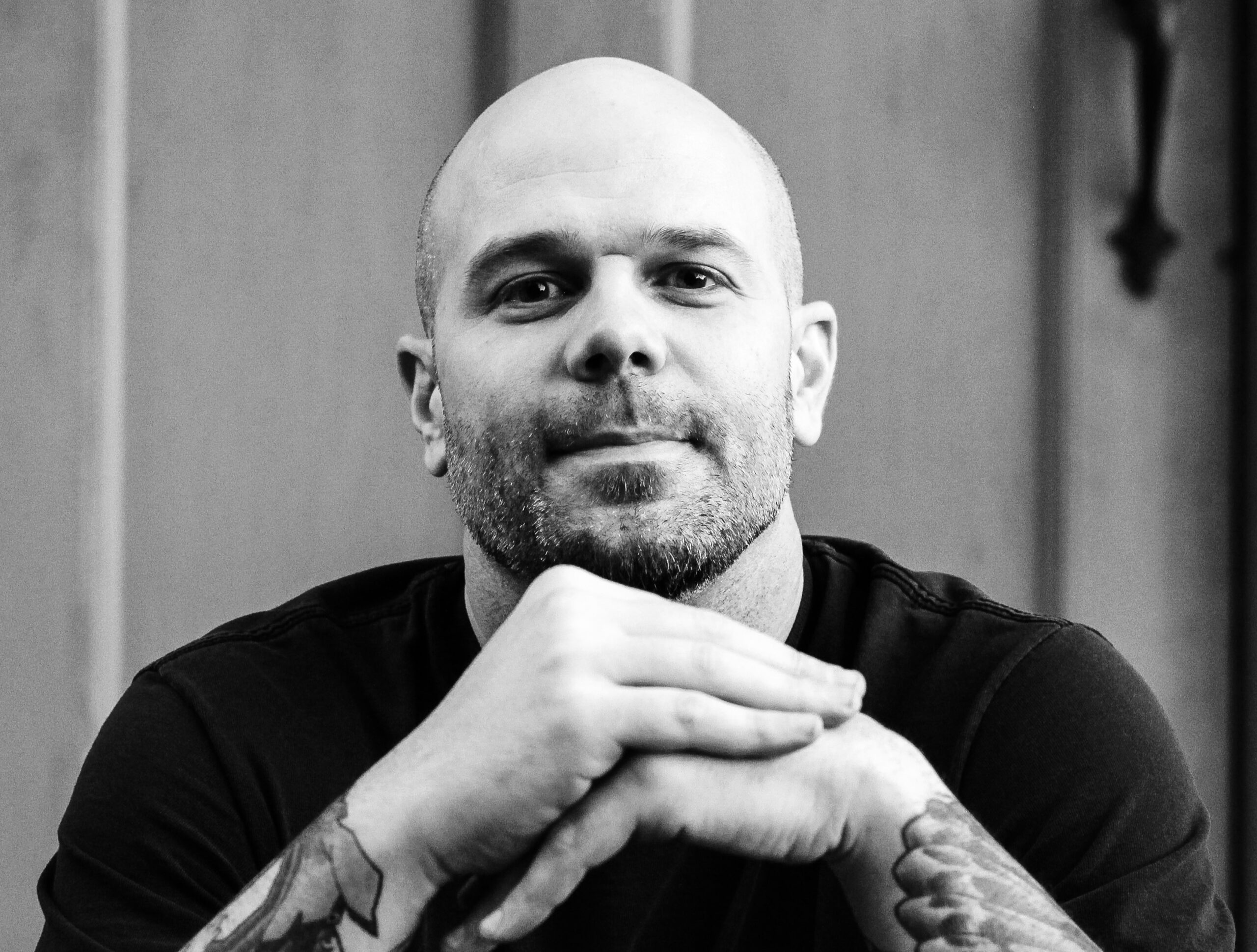
Jason Allen
Jason Allen writes fiction, creative nonfiction, and poetry. For his novel, The East End, Bonnie Jo Campbell provided the cover blurb: “Every page is filled with wise insights about social class and the human heart.” Jason teaches creative writing at Wichita State University and lives in Kansas with his sweet rescue dog, Luna. www.jasonallenauthor.com