
Good Girls
by Kate Brennan
The light outside feels punitive, like a cop flashlight. Or God. Nina laughs when I tell her this later because she doesn’t believe in God. Or cops. I haven’t made up my mind about either one, but I do know that that’s what sunlight feels like when you’re this hungover. It tunnels behind your eyes until the headache gathers there, all white and righteous and glimmering.
Aspirin would help, but just like Nina doesn’t believe in cops or God, Nina’s mom doesn’t believe in painkillers. The only medicine in the house is an expired bottle of grape cough syrup in Nina’s room, stolen last year from the pharmacy because you have to be eighteen to buy it. But that’s more recreational than medicinal. When Nina’s sick, she has to sleep for two days straight and drink big mugs of this dandelion tea that tastes like pond water. I don’t know if Nina’s mom believes in cops or God but she does believe in doing things the hard way and does not believe in chemicals. Nina and I like doing things the easy way. We love chemicals. That’s why we’re friends.
Closing my eyes soothes the headache a little. I start to see shapes. Really, they’re X-rays—the stripes of an umbrella, streaks of light spidering across the pool’s surface. A Solo cup doing a lazy kind of dead man’s float by the filter, now a tiny ember drifting in the red behind my eyelids.
It was Nina’s idea to invite the boys over.
They’d arrived with backpacks that rattled and they were all named something like Nick or Ryan or Matt. We played dumb, flirty games that involved them picking us up and throwing us in the pool, or stealing each others’ drinks and negotiating to give them back. We played sharks and minnows, except the boys were always the sharks. I glanced over at Nina at one point: she was sprawled on a raft with a boy on each side parading her around the shallow end while her dark hair trailed in the water like a rattlesnake. She looked biblical. I was sitting with Nick-or-Ryan in the hot tub, stealing puffs from his vape, testing how long I could hold blueberry smoke in my lungs before it burned. It took three tries before I could exhale without coughing, and when I finally did it, he said “good girl,” his eyes dark and shining.
The boys were always the sharks.
My cell phone buzzes in my pocket. Nina sent a photo—one of the boys folded over the rose bushes, throwing up. It’s only a few feet from where I’m standing. I look down and see the puddle beneath the bushes shining sickly in the dirt, curdled and thick as spoiled milk. I stumble back and retreat into the house.
I find Nina in the laundry room, sitting on top of the dryer with her knees tucked under her T-shirt and one hand shoved inside a bag of cotton candy grapes.
“Did we die?” she asks, not looking up from her phone.
“Surprisingly, no,” I say, closing the door behind me.
She groans, a sound made of every vowel mashed together and then stretched out long, like a rubber band. Tiny freckles pepper her cheeks and nose, making her look like a little kid.
We rehash the night from start to finish, filling in each other’s gaps. She tells me she cut her finger on a beer can in the driveway while shotgunning, on purpose, just to make the boys play nurse. That’s when I notice the gauze around her pointer finger, speckled with dried-up blood. She holds it up, beaming.
I tell her about the hot tub, about Nick-or-Ryan and his blueberry vape. I realize that the back of my throat still burns.
“He was into you,” she says, taking a bite out of one of those giant grapes, swollen with engineered sweetness. “Ryan and Matt kept insisting that we leave you.”
“You kissed one of them under the diving board—the one with the red shorts.”
“That was Ryan—no, it was Matt,” she says. “I wish it was Ryan.” She looks past me, out the sliding door. “How does the backyard look?”
“The rose bushes are a biohazard.”
“Don’t worry,” she says. “We’ll clean it.”
We don’t clean it. We spend the day on her couch, watching Real Housewives and diagnosing each other with various disorders. She says I have iron deficiency. I tell her she has slight autism and she agrees. We take clunky online quizzes that claim to predict our futures—where we’ll live, how many kids we’ll have—judged by the metrics of which colors, desserts and houses we choose. There’s one quiz that has you build a charcuterie board and tells you when you’re going to die. I don’t like that one because it tells me I’m going to die at 32.
“I think it’s because you chose olives instead of nuts,” Nina says, sympathetically. She’s going to live to be 103.
Around seven, we drive to the gas station for burritos. Nina drops coins in a claw machine while I stand at the counter and wait for our number to be called. There are no boys here, just men. They stare sometimes, but usually just at night. We’ve stood in their gaze at two, three in the morning, bodies tipping through every degree of drunkenness, like bright, fluttering specimens beneath heat lamps. I don’t think we’ll ever be women here, even when we’re women in other places. Here, we’re girls—the carousel of postcards by the door still shows the dolphins I gave names to when I was six. Here, I’m not old enough to buy the items behind the plexiglass: cigarettes with cowboys on the box, glass pipes twisted in blues, purples and streaks of gold, each one designed like a miniature carnival ride. And when I am old enough to buy these things, it won’t matter because I’ll be somewhere else by then.
“Look!”
I turn, and Nina’s waving around a stuffed frog with googly eyes she won. None of the men are staring at us today. I don’t think they recognize me in my soccer t-shirt, Nina with her freckles.
Outside, we sit on the curb with our legs stretched out, like discarded Barbie dolls. It’s colder now with the sun going down, but the asphalt holds some of the day’s heat under our thighs. We eat our burritos and watch the sky lose its color, the pink bruising like a piece of fruit left out for too long.
“So you’re saying you were so hungover that you saw God,” she says, chewing carefully.
“No, I’m saying I felt like I’d done something wrong,” I say. “Like I’d committed a crime and I was being caught.”
She lets out a short, dry laugh. “That’s the difference between us,” she says. “You worry about getting caught.”
“And you don’t?”
“No.”
“So full of shit,” I say, crumpling up my aluminum foil into a ball.
A slight change in the tilt of her eyebrow—the face she always makes when she’s about to do it. The first time I saw it was in the CVS cold and flu aisle, before she stuffed the bottle of grape cough syrup in her purse. And then there was the nail polish from the mall, then the bracelet from her grandma’s dresser. “I was going to get it when she dies, anyway,” she’d whispered while I’d kept watch in the hallway. It seemed logical enough. Nina can make anything seem logical enough.
I don’t know if anyone else would notice the moment when she decides to do it; it’s so subtle. The flick of her brow creates a small notch in her forehead while she thinks, and then she decides, and then it’s gone, and then she’s gone. I hold the stuffed frog by his crushed velvet leg and watch her disappear back into the store.
I wonder what she’ll steal this time. A pack of gum? Sunglasses? A box of chocolates or a rose from the Valentines Day display? Maybe someday she’ll go pro. She’ll buy a gun and she’ll point it at the man behind the counter and he’ll dump all of those cigarettes and pipes from behind the glass into a pillow case for her, like Halloween candy. I hope she goes to college and gets a job and a husband and a kid, but if that doesn’t work out, I hope she does this. I hope men are afraid of her. I hope she gets everything she wants and never has to pay for any of it.
For a moment I think I should do something, like start the car or act as a lookout. But I decide to do nothing, because I think she secretly wants to get caught. It would be another story to entertain us the next time we’re bored. Maybe it would be another story to tell boys named Nick, Ryan and Matt, and they’d make innuendos about the handcuffs. It would be fun.
A tap on my shoulder—Nina. She picked the rose. Of course she picked the rose.
The Eagles drones on the radio as we drive on backroads, the rose on the dashboard and the stuffed frog buckled in the back. Whenever we reach an intersection, I say either “left” or “right” and that’s the way she turns. The road winds upward, curving between hillsides dotted with dry brush and the occasional leaning palm. The headlights catch glimpses of wooden fences, the flash of a mailbox, a driveway disappearing in the dark.
“Did you know this road is haunted?” I ask.
“By what?”
“Girls who died in cars,” I say. “Or girls who were killed by boys in cars. I don’t know, I made it up.”
She nods, like it makes sense. “If you died would you haunt me?”
I think about it. “No,” I say, then change my mind. “Yeah.”
The road levels out and we can see the whole town below us. From here, it looks like a postcard, like something you could fold up and slip in your pocket. Something you could keep. The green signs hanging over the freeway, the electric blue glow of a swimming pool on a hotel roof. A few twinkling lights up in the canyon, where the actors live. I wonder if they used to steal from convenience stores when they were young. I wonder if any of them still do. Because anyone who’s done it knows—it’s not about money. It never is.
“Hey,” Nina says, nudging me. “You wanna go fast?” As if it’s something she never does.
“Yeah,” I say.
She rolls down all the windows and I grip the edge of my seat. I feel the car thrumming beneath me as we pick up speed—forty, fifty, sixty-five miles an hour. The air is cold and fresh up here, thick with the aroma of pine needles and moss. I breathe it in deep, the wilderness pulsing around us. For a second, I think about what it would be like to haunt this road.
Nina’s hair whips around in every direction, her head resting back with the kind of ease that comes only with the knowledge that you’re going to live to be 103. Because you know you can get away with it. Because she knows she can get away with it. It’s why she always drives fast. If you saw her, you’d probably just think she’s in a hurry. You’d think she has somewhere to be, but she doesn’t. Neither of us do.
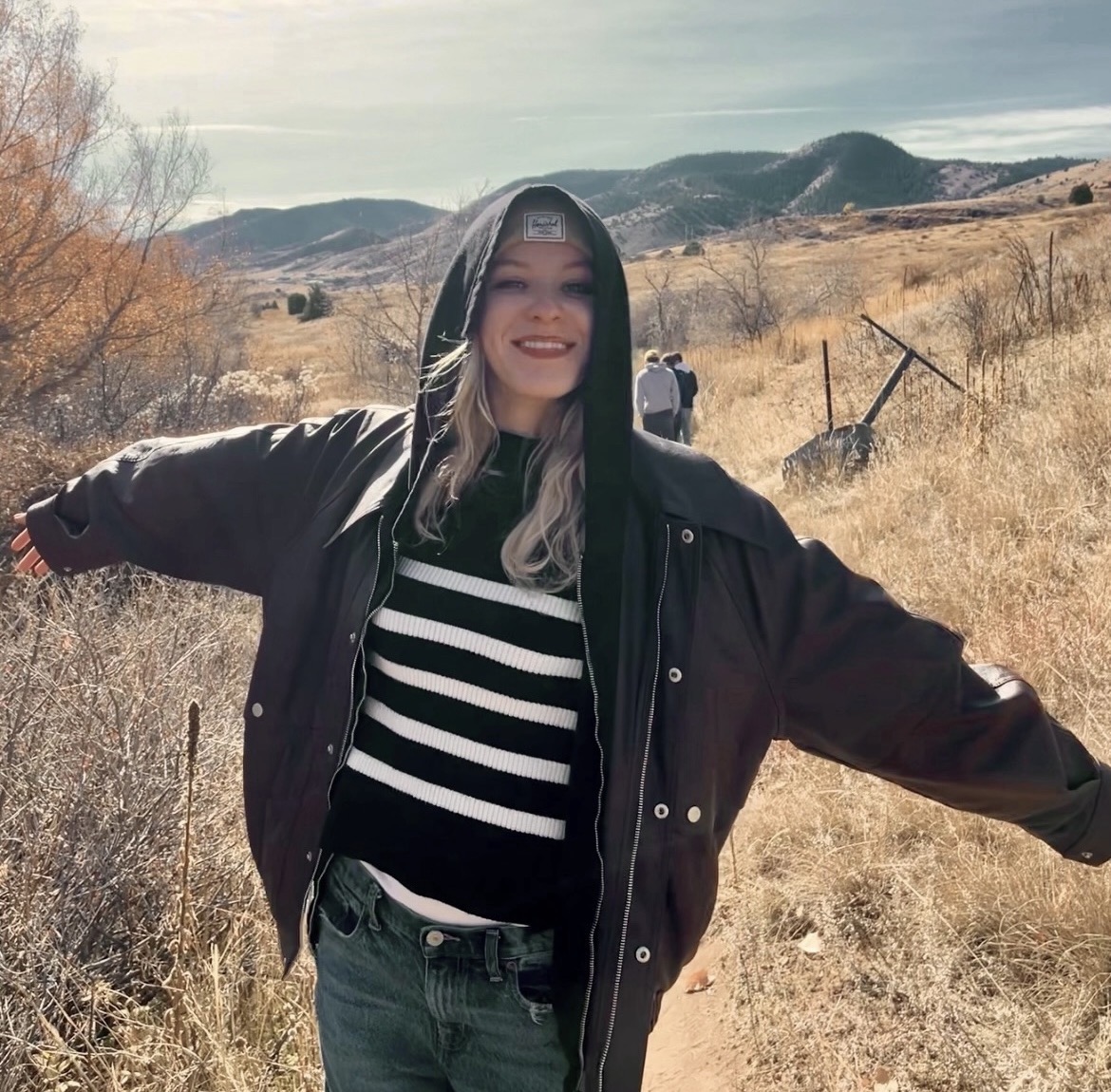
Kate Brennan
Kate Brennan is a New York-based writer whose work has appeared in New York Magazine, Vogue, Paper Magazine and more. She helped create a Webby- and Ambie-nominated podcast with The Story Exchange about Afghan women living under Taliban rule. Both fiction and nonfiction stories she’s written have won awards from Hearst, Scholastic, the BEA Festival, and more. She is a Fulbright Germany alumna.