
You Must Be Present To Win
by Carl Page
I’m sneaking up on the Bluebird Café, which will be on my right any minute now. I don’t want to get out and just stare at the blue awning and the storefront windows like a gawking tourist or some kind of deranged stalker, so I’ve settled for cruising up and down Hillsboro Pike—this will be my fifth pass—stealing looks from my car. It’s not like I’ve never been inside, but tomorrow I’ll be in the small center circle at Writers’ Night. It seems that I’m finally on my way up in this wacky, wonderful town; that, at last, I’ll be able to say I’m a songwriter and believe it.
A Travis Britt song comes on the radio, and since he’s not exactly my idea of a country poet, I reach to flip the dial just as my iPhone rings.
“Hello, Son.”
My old man. I’m speechless.
“It’s been a long time,” he says, though not plaintively. I can tell he’s trying to be conciliatory, as if willing to forget that I ceased visiting him in prison years ago.
“When did you get out?” It’s all I can think of to say, though I’ve already heard from my mother that it was two weeks ago.
“I’ve got to be at the Bluebird tomorrow night,” he says, ignoring my question.
He heard from Mom—I could kill her for telling him. My heart feels like it’s beating two hundred times a minute and I’m having a hard time catching my breath. I slide my Camry into a Walgreen’s parking lot and scowl at the phone. “Dad, this isn’t the right time. Don’t do this to me.”
The line goes silent for what seems like an eternity.
“Charles, I once had a son who was an all-conference basketball player and I never got to see him play a single game in person.” He doesn’t mention that I was shaving points. Nor did he see me sporting around town in the new Corvette the gamblers gave me.
It pains me to say it, but the Buckner family has a long history of thievery. Like his daddy before him, Brigadier General Hudson Beauregard Buckner (a notorious black-market purveyor of military equipment), my dad was one of the biggest scoundrels the state of Kentucky has ever known. We learned that he’d fleeced clients out of millions in settlement money in a class action suit against a drug company when the U.S. Marshals stormed into our home one cold January evening and hauled him off in handcuffs.
It reminds me of a story I heard the other day on NPR. It seems that birds who are separated from their mothers—and have never seen a nest built—still know how to piece together nests for their young, proving, so the theory goes, that learned behaviors can be inherited. Which could explain a lot of things. Like my point shaving, my disbarment, et cetera, et cetera.
Dad, like all con men, is nothing if not persistent. “Son,” he continues. “I know I don’t deserve your sympathy, and I’m not asking for it, but I’ve missed so much of your life. Let me share this moment. I’m so proud of you.”
It’s not like I hate him, though I’ve plenty of reason to. His absence during my formative years was a continuous source of ridicule, but I’ve come to view the man more as an irritant, sort of like a rash that won’t go away. I’m not interested in holding grudges, I just wish he’d let me be. At least until after tomorrow night.
“Dad, I doubt I can even get you a ticket. There’s only ninety seats and they’re sold-out months ahead.”
Stone silence. This can only go one way—he’ll pester Mom until she pesters me and I’ll eventually give in, so why waste the time. “I’ll call the owner,” I say.
#
I rehearsed my intro at least a dozen times this morning, practicing in front of the bathroom mirror, searching for just the right mixture of insouciance and irony.
I arrive an hour early, but still have to weave my way through a line of fans stacked in front of the small storefront windows, hoping to snag a few of the seats saved for latecomers or left by no-shows. My guitar case strung over my shoulder, nobody seems to mind when I cut line, though I’d bet my meager life savings that no one in the queue has a clue who I am. I’m here early because I need time to get situated and work through my rituals. Like sitting up and down in my chair two to four times—but never an odd number—and readjusting my belt buckle to make sure I’m centered.
Mom and dad are perched in a front-row table along with my publisher, Lin Evans, close enough to reach out and touch the stage. My father has shown up in a patch madras sportscoat, an old-fashioned straw hat with a wide black band, white bucks, and what I’m sure is a knockoff Rolex bought off another inmate. We give each other a long hug, but I tell him that’s it until after the show. Also filling the small gallery are several regulars and the usual collection of tourists in Garth Brook T’s, wide silver belt buckles, and Country Music Hall of Fame hats, come to pay homage to the iconic Bluebird.
As I’m settling in, I notice heads turning and a commotion at the front door. Blinded by the lights shining down on the songwriters’ circle, I can’t be sure, but it looks a lot like Luke Johnson, which explains all the hubbub. You never know when a star will show up at the Bluebird. At the age of thirty-three he’s already a country music legend; he’s won so many awards and had so many number one songs I’m sure he’s lost count. This could go several ways. If he’s asked to “sit in,” which he will be, I’ll be completely overshadowed—something I’m getting used to. But on the other hand, if he likes one of my songs, it’s possible I could talk him into cutting it.
The show goes off pretty much as I’ve seen so many times before from the safe distance of the crowd, though Dad repeatedly violates the Bluebird’s “Shhh” Policy of no-talking-during-the-show, making sure everyone knows I’m his son. My mother sits docilely through all this, having long ago learned the futility of restraining the man.
Thankfully, I’m not on first, so by the time it’s my turn I’ve settled down a bit. I play a few songs I’ve been lucky enough to find artists to cut—no chart-toppers, but they’ve been well received or I wouldn’t be here tonight—and I play a new piece to what seems like sincere applause. Then, as the middle performer, I do what I’m expected to do: I introduce our special guest and invite him to sit in.
The crowd parts to make way for Luke. Someone brings him another chair and a bourbon on the rocks, and he proceeds to wow the crowd with a couple of his favorites. By the time he’s through I’ve shrunk within myself, so I pass the baton to the third songwriter on the program and let him follow Luke: it’s a crappy thing to do, but there’s nothing left in my tank.
As I pack up my guitar, two things happen, one entirely predictable, the other entirely unexpected. First, I notice my father traipsing back to Luke’s table and signaling for the waitress to bring another round of drinks. Before I can intervene, he’s already into a sales pitch for his latest get-rich scheme, making wide sweeping gestures with his hands. I can’t think of a good way to cut in, especially since Luke, God bless him, seems shell-shocked. Also, if I’m not mistaken, a little intrigued. I remind myself that he’s a singer from Eastern Kentucky and not a businessman.
According to my long-suffering mother, Dad’s been hawking interests in an oil partnership to drill beneath tapped-out coal mines in Western Kentucky. Supposedly the oil can now be extracted economically from under old coal seams, thanks to “new technology.” All he needs is start-up capital to buy the mineral rights and line up drilling contractors. He got this scheme from a fellow inmate, a former coal baron jailed for decades of workplace safety violations in his mines.
But Dad makes a mistake—he pauses to take a sip of his whiskey—which gives me the chance to dash in and put a halt to it. I apologize to Luke, tell him we need to hustle to a family get-together, and thank him so much for joining in. That’s when the second entirely unexpected thing occurs. “Hey, man,” Luke says, “I’ve got a song I’ve been working on, but I can’t get over the hump on it. You interested in coming out to my place and helping me with it?”
It takes me a minute to register what I’ve just heard. Am I interested? Is the pope a Catholic? Just like that, misery turns into mystery and wonder. I’ve been told countless times it’s how things happen in this outrageous city, but I’d come to think it was all fairy tales.
#
It seems like I’ve been around music my whole life. Talent shows, singing at picnics, you name it. I’ve never wanted to be a rock star. I want to be known as a unique lyricist, a poet. He lives a quiet life outside Nashville and gives the occasional concert, the tickets sell out in minutes, people will say.
Giddy as I am tonight, it’s hard not to reflect upon the long eight years since I fled to Nashville. After a year in the federal prison camp in Ashland and the divorce that followed, I bolted from Louisville in a spirit of nervous faith, wondering if a disbarred lawyer and point-shaver would be abided in Music City. And while it hasn’t been easy, I’ve found Nashville more forgiving than my native Kentucky, where my sins stained the holy grail of basketball. Even so, my past seems to hang over me like a vindictive vapor.
It’s been a slow process, though recently things have begun to pick up, my notoriety having generated a certain cachet in a town that loves to harbor the occasional outlaw. I’m nowhere near having made it, but at least I’m finally experiencing some forward motion.
I’ve played in cover bands on Lower Broad and been a regular at open mic nights at The Commodore Grill and the Douglas Ave Corner Café, following the Nashville formula of “playing out”: sitting in when somebody’s guitarist is sick, hanging with other writers at writers’ nights, and cowriting with new friends. As folks in the industry like to say, “In Nashville, you must be present to win.”
I’m propped up in bed trying to wind down from the evening, though I can’t stop reliving how the night played out, how when Luke took the stage I was crestfallen. My mother believes that luck comes in twos, that good fortune is inevitably followed by bad, a sort of corollary to Newton’s Third Law of Motion. So I’ve always been leery of success and awards, waiting for the next hammer to fall. Part of me is expecting that tonight’s sudden gift is bound to be followed by something equally disastrous.
I’d thought things were going well ten years ago too, but that was when it all began to unravel. When, after a successful start to my law practice, the FBI dug up a cold case I’d thought was safely buried. It’s an old story, in that predictably seedy way the world seems to mostly overlook: college basketball coach is lured into bad investments by boosters, teeters on the edge of bankruptcy, is approached by gamblers offering a way out: just have your star player shave a few points in a few big games. You don’t need to lose, just make sure you don’t cover. There was a new sports car in it for the star player—me—and a cash bonus each time we hit our numbers.
I’ve been reading a Nelson DeMille book to try to get sleepy. I’m on an odd-numbered page, 143, so I read through 144 and turn out my bedside lamp, a replica of Lady Justice holding her scales and her double-edged sword, unsheathed and ready for action.
#
I have a breakfast meeting at the Pancake Pantry, Nashville’s legendary breakfast spot, with Lin Evans from Warner/Chappell and Samantha (Sam) Hutchins, my rep with Warner Bros. Records. They’re prepping me on how to maximize my upcoming co-writing session with the great Luke Johnson. Then Sam lays a bombshell on me: “I’ve lined up an interview for you with The Tennessean. They’re doing a spread in the Sunday edition on local songwriters who”—she hesitates— “work mostly behind the scenes. They want to play up how you stuck it out during the lean years when nobody was cutting your songs. And they want to talk some about your basketball history,” she adds quickly.
After a long pause, I say, “I’m not interested in talking about basketball.”
Sam looks to Lin, who takes his time before saying, “Charles, if we try to carve that out, it’ll just insure they cover it in more depth.”
Possibly I should have put more distance between myself and the venue of my crimes, headed west, away from the Bible Belt, to L.A. where the banality of my sins would have been subsumed by the audaciousness and variety of Hollywood sleaze. We go back and forth until they wear me down, hinting at how the music industry doesn’t favor uncooperative clients.
#
The voice on my GPS trills out directions to Luke Johnson’s country estate like a siren beckoning Odysseus. I come to a grand entrance with extravagant landscaping. After announcing myself, the gates part and I make my way down a long arboreal entrance road flanked by white plank fencing. The meadows give way to a white colonial mansion posing on a hill in the distance. (I’m thinking Tara.)
When we chatted at the Bluebird, Luke said he wanted help with a song idea. But by the time I’m ushered into his basement studio he’s already discarded that tune and is looking to me for something new, so it feels less like a cowriting session and more like an audition. His rise to fame has been solely as an artist, but now that he’s made it, he wants more, of course, and longs for the respect of songwriting success.
“I read your article in the paper yesterday,” he says. “So, tell me, what’s it like doin’ time in the slammer?”
Luke apparently isn’t in to the small-talk-first approach. “Not nearly as nice as here,” I finally manage. “How do you like to get started?” I ask, feeling my way. I’d like to dump my bottle of water on his head.
“How do you?”
“Well, I like to just start talking about whatever’s on our minds. Just a conversation between friends. Like, where’d you go to dinner last night?”
“Lisa and I ate here. We had her sister over—she’s coming off a nasty divorce. Her husband was always the last one in every bar.”
“Well, there you go.”
I strum a few chords on my guitar, then start humming, “bump, da, bump, bump; bump da, da, da, bump.” My head rocking back and forth, I close my eyes and start freewheeling. This is what I love—it’s why I’m here in Nashville.
“I was the last one at the bar when I saw you walkin’ in. I shoulda been headin’ for home, but all I could do was grin. Your turn.”
Luke’s been humping his head and shoulders in time with my tune, but now he goes rigid before strumming a few chord progressions of his own, something with an entirely different rhythm and a higher pitch. I assumed he’d continue with the same groove and simply toss out some lyrics of his own for the second verse. When he stops picking he looks at me expectantly, as if to say, What’d I bring you out here for anyway?
He heaves himself up from the sofa and takes a long, slow stretch. Then he strolls past his guitar rack.
“Charles, I’m just not into that. Not feelin’ it. I know you’ve got another one in you,” he says, pulling off his Stetson and rubbing his head. He pulls at the miniature guitar that serves as the handle for his refrigerator and extracts a pitcher of orange juice. “They say tomato juice is good for hangovers, but I’ve always been partial to O J. Want some?”
I shake my head as he pours himself a glass, then leans his elbows down against the bar to prop up his head, like a machine gun on a tripod.
“You know,” Luke says. “I like to start with the melody, then let the words come later.”
I’ve always thought of myself more as a writer setting words to music, and I’ve never liked the melody-first approach, though I know a lot of good writers who use it. For me, it’s hard to marry up the lyrics; there are usually too many notes, for one thing. But I’m here to satisfy Luke; I begin strumming another tune I’ve been playing around with, but then his phone rings and he holds up a hand to silence me. “It’s my bookie,” he whispers, pointing at the phone. “Spreads on this weekend’s college games. You want in? I can float you a few hundred.”
What a guy. I shake my head no, then he says with a smirk, “Yeah, I guess this ain’t your kind of bet. I don’t know any players who’ll be throwing off.”
I stare at him with barely disguised hatred, and I think he knows he’s overdone it. After a few rapid fire minutes of universities, lines, and large sums of money, he hangs up and says, “Maybe we should take a break,” which is code for This isn’t going anywhere. I start to say that we’ve hardly begun, but I hold my tongue.
“I’d love to stretch my legs a bit,” I say, as if it had been my idea. “I wouldn’t mind taking a walk around the farm.”
I stride out by my lonesome—past Luke’s indoor pool, bowling alley, gym, his gun room with enough armaments in glass cases to equip a good-sized Tennessee militia—and emerge onto an enormous, terraced patio. The rear acres of the farm boast a swimming pool and an executive golf course. Horses frolic in the distance. I trundle down a slope toward the horses and try to get my mind back into neutral, but it’s not easy.
When I lumber back into the studio it’s as if Luke has received a shot of adrenalin. He’s full of energy, whereas this morning he was about to nod off. He stomps over to his guitar-handled fridge and comes back with a cold Bud, takes a few large swigs, and resumes strumming his guitar. Then he lays it across his lap and says, “You know something, I just took a shower and started thinkin’, I kinda like that idea about the last one in the bar. Can you put some meat on it?”
“Sure,” I say, after an awkward silence. “Let’s try another angle. I’ve been into trains lately. Here’s something I was playing with last night. See what you think.”
I’m lookin’ for that seven o’clock train,
got doubts and regrets in my brain.
I hope you’ll be comin’ today;
but I know you’re not goin’ my way,
no, I know you’re not goin’ my way.
“I kind of like the setting, the waiting for somebody who’s coming to where you are, but not for you. We could work in your ‘last one at the bar’ idea in the next stanza.” Luke scratches his chin with his thumb and forefinger, as if weighing the idea carefully. “Yeah, I’m kinda gettin’ into that. Give me a little more.”
I strum some more, playing with a few chord progressions to appeal to his melody-first preference, then add another few verses to the melody, freewheeling.
“Hey now,” Luke says, “I’m really likin’ that tune. How’d ya come up with that so fast?”
“Sometimes things just come, sometimes it takes days or weeks,” I say humbly. “Maybe I’ll start doing melody first.”
“Yeah, man, yeah. Yeah.”
We go back and forth, strumming away for another hour or so. I let Luke try a few chords here and there and tell him I’ll see if I can work something in around them, which is a lie.
My mind floats back to when my college coach first reeled me into his point-shaving scheme. I’d been caught up in the thrill of pulling a fast one on everybody, and I’d done all the real work while Coach sat back and collected the big bucks. It would be the same story with Luke.
I know burning bridges is stupid, especially in this relationship-driven town, but even as I’m telling myself Don’t do it, I feel an irresistible urge—it’s as though Dad is standing behind me, pushing me forward. “Luke,” I say, then pause at the brink. “Before I leave, let me run out to the car and get a brochure. That oil deal my dad was telling you about? You really ought to consider it.”
“This thing’s for real?”
“It’s guaranteed oil’s there. New technology’s come along, so now you can suck the oil out of these old mines at a reasonable cost. The big oil companies—your Exxons and Chevrons—are after bigger fish, but for private investors with some capital to spare…” I know the less I say, the more intrigued he’ll be; in a few minutes he’ll be begging me to take his money. It must be an inherited skill.
“No bull?”
“Yeah, no bull.”
“Could I get some of my friends in?”
“There’s only a few slots left. We’d better just keep it between ourselves.”
So what, I think, if Dad does hit him up for a few hundred grand—that’s chump change to somebody like Luke. Even if Dad gets into him for a couple million, Luke will survive. Maybe he’ll have to sell off a few acres, shave off a couple holes on his golf course.
I dash out to my car and return with one of the brochures Dad gave me. When we call it a day I leave with a large check in hand. Luke actually stands at his front door and waves at me with a big smile on his face, like he’s proud to have become a songwriter and always knew he had it in him. And now he’s become an oilman to boot.
Dad will string him out for years. He always does.
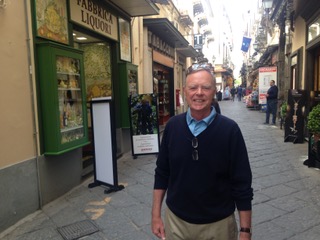
Carl Page
Carl Page is an attorney in Louisville, Kentucky. He attended Vanderbilt University and the University of Kentucky College of Law. His recently completed novel, CRIME AND CONVICTION, a modern-day reimagining of Fyodor Dostoevsky’s Crime and Punishment, is currently under submission.