
Red Lights
by Nancy B. Miller
Of all the people on the planet, it was Tracy’s mother who told her the Marilyn Monroe story. A notable morning, because her mother said “asshole” as she stabbed the rubber end of a spatula onto the front page of the Stockton Reporter. Ineffectual to cause harm, but Tracy appreciated the vehemence and the swearing. Lillian, never Lily or, God forbid, Lili, raised the still-bent spatula to Tracy and explained what happened to Ms. Monroe.
Tracy, in turn, has told the story—and it’s a true story, it really happened—to many, many people. Mostly no one has heard it before, not boyfriends, not cabdrivers, not coworkers blinking back stinging tears and slicing onions at six in the morning.
She forgets that it was her mother who told her until she remembers. The memory comes back to her when she’s in a quiet space between loud things—mid-sip on a stool at Spec’s or standing sentinel-like waiting for the Swingin’ Utters to start their set or ashing her cigarette in the kitchen sink, Geoff’s friends shouting over each other and the aggressive music. Leaning against the laminate counter, picturing the guitarist as easily as hearing him, the bellicose style a posture as much as a sound.
This time, when she remembers it was her mother who told her the story, it’s the middle of August and she’s in the parking lot of the Shady Grove Hospice Facility. Shady is an aspiration rather than a fact, though. It’s mostly sunshine here. She rests her forehead against the steering wheel of her mother’s ’85 Corolla (four doors, faded metallic gray and a Keep Tahoe Blue sticker peeling on the back), her brown roots in need of bleaching, her split ends splayed, and takes a deep breath of warm air. The heat reminds her of middle school when she would wait for a ride home at the convenience store, sitting on the curb, sweat gathering under the straps of her backpack, the weight of her textbooks forcing an uncomfortable posture.
Tracy squeezes her eyes shut until they hurt and curses when she realizes she forgot to grab a towel for the seat. The pleather will burn her thighs when she returns to the car. Living in the Tenderloin, she doesn’t need to outsmart the sun there, but she’s going to be back in Stockton for some time, so she needs to relearn. Her mother has cancer again. Tracy knows it’s bad if her mother is in a facility with hospice in the name, but there have been no particulars. Lillian has always preferred vague unease to alarming specificity. Her mother asked for her, so she’s back. Tracy took the bus from the City, picked up her mom’s car (unlocked, the key in the glove box as before) and drove across town to get here.
#
Lillian can’t remember a time when she wasn’t a mother.
It must’ve happened, of course. Obviously, her life didn’t begin in the delivery room when Tracy’s cry rang out like a strong rebuke. I didn’t ask for this, the cry seemed to say. Get me out of here! Obviously, Lillian had years before boys. Before blood bloomed between her legs, until it didn’t. Growing up in a religious household, with church on Sundays and fish on Fridays, Lillian had a lot of time to think about punishments, less about miracles. They were a quiet family, as if Lillian’s parents’ cracked lips, unable to heal no matter how much Chapstick they used, made it difficult to talk.
Tracy started loud and stayed loud until the summer she wasn’t. Lillian’s daughter talked, sighed, and sang. She exclaimed, screeched, and cried. She was a symphony of sound until the stillness settled in around sixteen years old.
That summer, Lillian wondered if her daughter was pregnant. Had all her stern pronouncements been for naught? God damn that girl if she got pregnant. Tracy was supposed to break the cycle, not continue it forever and ever, amen. They were supposed to grow up and leave this place together. As much as Lillian knew it was too big a burden to put on her daughter, she still dreamed of it then and now—the two of them driving away with the windows open and the radio loud. Lillian didn’t realize it at the time, but when her daughter got quiet that summer, it was because Tracy had already decided to leave. Looking back, Lillian could see it was just a question of opportunity and means for her daughter. Even now, Lillian never knew the motive, unless it matched her own desire to leave, a desire she never fulfilled.
At least if her daughter were pregnant, Tracy would’ve needed her. They would’ve washed bottles and laughed until they cried. Lillian could’ve shown Tracy how to change a diaper, how to give a baby a bath in the kitchen sink, and how to cinch the buckle on a car seat. Her daughter wouldn’t be alone like Lillian was. Lillian would hold her crying grandbaby so that her daughter could sleep.
But that hadn’t happened. Her daughter wasn’t pregnant that summer; she was preparing to get out of there. Looking back, Lillian realized that when Tracy got quiet that year, she was holding herself still like a driver at a drag race, glancing over to assess her competition and finding them lacking. Tracy left when she was twenty-one years old, but she’d made up her mind when she was sixteen. Once the quiet settled in her daughter, it never left.
Lying in this bed, the sharp sun slanting through the window, Lillian knows her days by the shadows moving across the white walls and the white sheets, the coffee that still appears with her meal in the morning. Even watered down, she enjoys the taste; it reminds her of the strong flavor she used to prefer.
#
Tracy locks the car and walks up the well-maintained path of the facility.
No grass grows between the stones, and the flowers stand straight though they should be wilting. Tracy hitches her purse on her shoulder. Does she have a pair of shorts at her mom’s house? Flip-flops? Her jeans and boots weigh her down as if they’re magnetized to the ground. When her cellphone rings, she doesn’t answer. Geoff will have to learn to get by without her for however long this lasts.
“Who are you here to see?” the woman at the reception desk asks. She scratches her freckled forehead, and the motion pushes up her wig like the rim of a baseball cap on a tired coach.
“Ms. Kepler.”
Tracy doesn’t use the “Mrs.” that her mother prefers. It had been old-fashioned even when Tracy was in high school. Her father had never accomplished much, so why refer to him at all?
“Alrighty,” the wig-lady says, adjusting her bangs so they fall correctly now, a simulacrum of a hairdo. “Room 115B”
Behind the partition, Tracy braces herself for her mother’s emotions. It will pummel her, like the day she left home at twenty-one years old. Her mother grieved that morning, with tears and lamentations, portents and recriminations. Tracy felt like she’d been joining a wagon train west, never to be seen again, but she’d only been driving eighty-four miles to the Bay. Maybe a long distance in pioneer days, but not in 1995.
Tracy wishes she hadn’t quit smoking and pushes the stained white curtain aside. The window blinds create narrow rectangles of bright white on the bed. Her mother’s face is sunken. Dark circles gather under her eyes like smudged mascara. Her hair is soft and fine and white, white like the bleached sheets on her bed. It’s shorn close to her head like an aged actress playing Joan of Arc. Tracy imagines a sword and armor stored under the articulating bed.
“Who called you?”
It’s her mother’s when-did-you-get-in-last-night voice. Tracy can’t reconcile this bedridden, bleached version of her mother with the woman she’s had in her head all these years. A woman with black-from-a-box hair, blue eyeshadow and pink nails. This woman’s nails are bitten to almost nothing.
“The office reached me,” Tracy says. This is a lie. She doesn’t know who called her.
“Well, I didn’t tell them to.”
The woman on the phone said, “She asked for you.” Her mother had never asked for anything in her life, so Tracy responded with this trip back to Stockton. Every question she thinks to ask her mother now that she’s here doesn’t make it past her lips. The silence stretches awkwardly.
“Why are you wearing jeans in this heat? For Christ’s sake, it’s summer.”
Tracy drops her purse on the floor. “You raised me.”
“I tried.”
Tracy stays as long as she can, answering her mother’s questions as if the past fifteen years never happened.
On the way home, Tracy alternates her thighs on the driver’s seat to relieve the burn; her fingertips barely touch the black wheel. She takes the long way and stops at the same drive-thru from high school. One large Diet Coke (extra ice) and a medium fry later, she uses her old key and unlocks the door to her mother’s house. The fries are fresh from the oil and burn her tongue.
As long as her mother is at the hospice facility, Tracy wakes up before sunrise, grabs the car keys, toes on her old flip-flops and drives out of town toward the fallow fields, running red lights as she goes. There are no other cars on the road, no danger of an accident, but still the adrenaline gets her through the day. After her first visit to Shady Grove, she knows she’s not leaving until it’s all over. Months or weeks—it doesn’t matter. She’ll serve her penance. The morning drives get her through the days here, get her through the job she finds at the title company, get her through the evenings with her mother at the facility, get her through the somber trips to her mother’s house at the end of the night, her hands at the ten and two, hot bag of food waiting on the seat beside her.
#
Lillian knows it’s bad when Tracy shows up.
Her daughter never wanted to leave that basement apartment where she lived with her boyfriend, Jeff or something. Lillian didn’t meet him, but she didn’t need to; his band, his many part-time jobs, his couch. In her imagination, it has an indent from where he never leaves it.
Lillian visited her daughter once but only saw the sliver of her daughter’s apartment visible from the street. The windows had three edges because the steep sidewalk sliced them corner to corner like a PB&J sandwich. Her daughter drove Lillian up and down those precipitous, wet streets in the old Corolla. The buildings, parked cars and occasional trees were blurred from the rain and the fogged windows. Tracy talked about her boss at the bar. She hadn’t stopped her tirade even when she braked so hard Lillian thought her daughter’s foot might go through the floor. Going uphill, Tracy pulled the emergency brake at the light. When it changed, she let it go slowly as she eased on the gas, gliding forward, not with the jerking motion that Lillian expected, but like a professional driver. Her daughter barely paused to take a breath. When did she learn how to do that?
“I haven’t cleaned, but you can come and see my apartment. If you want.”
It wasn’t a question, but Lillian knew the correct answer. As much as she wanted to investigate her daughter’s new life, open the cupboards and see this boyfriend for herself, she restrained herself.
“No, I should start the drive back.” Lillian wasn’t sure how long she would be welcome, so she’d planned the visit for only one day. Getting to the City was a pain; her daughter should come back to Stockton more often.
“Sure, okay.” Tracy agreed, so Lillian knew she’d done the right thing. What would it have been like walking down those stairs? Would Tracy’s boyfriend look up from the TV long enough to say hello? Would she have been able to refrain from saying what she thought? Probably not.
Lying in this bed, comfortable as long as she doesn’t think about it too much, she hopes her daughter doesn’t return to him when this is all over, but who is she to dispense relationship advice?
“Does he love you?” she asks Tracy the next time she enters the curtained room.
Her daughter startles, almost dropping the plastic cup of ice chips. Lillian waves it away when Tracy gestures with it.
“My relationship is none of your business,” Tracy answers.
“He should,” Lillian says. She rolls onto her side to face the window.
“He’s not mean,” Tracy says.
That’s something, thinks Lillian. Not much, but something.
After the first day, Lillian isn’t sure her daughter will return for another visit, but Tracy comes every day. So, that says something about how bad her condition is. Lillian knows, really, what with the never leaving the bed, the efficient nurses washing her limbs while they talk about their husbands, the bedpans she’s not really embarrassed about anymore. The doctor doesn’t visit as much, and she no longer asks questions when he does, so she’s guessed, but she’s never died before, so she isn’t sure.
#
The receptionist waves when Tracy walks by. After six weeks of visits, everyone working at the front desk is familiar with her. Tracy considers the transience of the place. The lobby has the feel of an empty train station: furniture bolted to the floor, fake plants in concrete pots, the coffee maker permanently out of order. Thankfully, the receptionist’s wig is attached firmly tonight.
Her mother’s room is quiet again; the only sound is the steady wheezing of 115A. One family member sleeps in the chair by the bed, his mouth open in solidarity.
“You’re back,” her mother says.
Whatever she’s taking to manage the pain, her words are slow, slipping together, but her surprise is clear, as sure a sign as any of her decline. This woman is still foreign to her, an incarnation she didn’t anticipate, and one she can’t reconcile with the mother of her youth, the woman who taught Tracy how to ball melons and fold bottom sheets.
“Do you remember the Marilyn Monroe story?” Tracy stands at the end of the bed. She shifts her feet like she’s giving a book report in sixth grade.
“What story?”
“You told me when I was in middle school. It was in the paper. About what happened after she died.”
The thing is, her mother has to remember. Tracy measures other people’s goodness by the extent of their outrage when they hear it.
Her mother closes her eyes. “Can I have some water?”
Tracy notices her mother’s full mug of coffee, cold now that it’s been sitting out all day.
When she returns from the water station, she expects her mother to feign sleep, as she does most evenings. Instead, she turns her head to watch Tracy drop heavily into the chair and set the plastic cup on the metal tray.
“Tell me a story,” her mother says.
“What kind of story?” Tracy sits up straighter. Is this a test?
“About San Francisco.”
This is definitely a test. “What do you want to know?”
“Probably not much.”
Tracy laughs, an unexpected bark, and her mother coughs a smile. There are stories she can’t tell, stories she doesn’t want to tell, stories she doesn’t want her mom to know. San Francisco is a minefield.
After a minute, she decides to tell her mother about the ship in the Embarcadero.
During the Gold Rush, when ships docked in San Francisco, they didn’t always have enough men for the voyage home. The crew abandoned their posts on board for the foothills of the Sierra Nevada, where gold mines and fortunes awaited. Ships were anchored in the Bay but weren’t able to leave, so many that they were scuttled. The impatient city was built on top of them.
Four years ago, construction workers found a preserved ship under a demolished building in the Embarcadero. Archeologists were called in to uncover it. She walked around the deep, wide hull on a narrow pathway made for the purpose. Like a beached whale, it lay inert, majestic but weighed down by its own gravity now that the salt water had retreated. Tracy toured the site during her lunch hour. She wore a hardhat and listened to the archeologist talk about the history of this vessel. It was too big to fully excavate, too expensive, in other words, so it was burned in place. A pyre for the past. When she returned to work after lunch, she couldn’t concentrate on the monthly rent reports and instead thought of the City as it must’ve been at the start, before the earthquake and fire, before the mansions on the hills, before the streetcars. Would it have been easier or harder to make your fortune at that time? She didn’t know. She wasn’t sure. Certainly, a sense of possibility had never left the place.
Her mother falls asleep while Tracy talks. Tracy stays until it gets dark, the days shortening as they move into September. She hasn’t thought about the Niantic in a long time.
#
Lillian’s thoughts move without her.
She feels no longer in charge. A surrender occurs when she doesn’t sense it. Other people even move her limbs for her. She’s a failing puppet, arms and legs at rest or all akimbo. She thinks of the Tai Chi class in the park, always held early, before the heat settled in the valley. She thought about joining even as she made fun of them in her head, but never worked up the courage. It was too late now. Would they have welcomed her? Would they have made room in their usual formation? She would have started at the back, maybe the side, polite nods all around. It would have been nice. If they had invited her to coffee—maybe they drank tea?— she would’ve gone.
After all this time, it turns out her daughter is kind. Her daughter sits beside her bed in the uncomfortable chair dragged from the waiting room and holds her hand. She tells stories. Lillian no longer knows if they’re real or made up. It’s all of a piece, though, anyway. The stories are funny and sad. Some are definitely true, and even in this state, Lillian knows her daughter changes the endings of others. Tracy is still keeping things from her mother, but she supposes her daughter is allowed. Lillian thinks of all the things she kept from her own mother. Lillian probably can’t remember her mother’s name if asked, but she can remember every lie she ever told Her Lady of Perpetual Disappointment, especially the summer she got pregnant. Got pregnant! Like she got a cold or got a mosquito bite. Just like the Virgin Mary, her baby’s father was nonexistent. She might as well have been a virgin. There was little sensual pleasure found in a twin bed between a movie and a basketball game while his parents were out to dinner. She purposely forgets the awkward fumbling of two teenagers. One of whom bragged about getting into U.C. Berkley in his joyous afterglow while the other wondered if this could really be what all the fuss was about.
It all worked out in the end, though. Sometimes Lillian squeezes her daughter’s hand too hard or tries to squeeze it when Tracy’s not there. The window is her hourglass. Tracy is her ballast. This isn’t what she wanted. None of this was what she wanted. If she had the energy she would have screamed, she would’ve risen from this bed and upended the metal table on wheels, the plastic chair, the blinking machines, the microwave-looking things that are keeping her alive or least letting the nurses know she’s not dead yet. Are there nurses? Are candy stripers still around? Or are they just custodians, minding the floors and changing the sheets around the prone woman? There was a time when she imagined a grand deathbed scene, an Agatha Christie of an end. She didn’t know what damask was, but she knew it would’ve surrounded her with dark wood and gray skies. She’d somehow become an English lady in this version of her death. A woman whose thighs didn’t stick to the driver’s seat, a woman who tended roses instead of neglecting the flowers in a plastic pot on her narrow front step. If there is a heaven, she hopes she goes to the shady bit. It is so bright here. Maybe her eyes would be able to handle it, maybe that would be her heaven. Sun that doesn’t burn, light that doesn’t blind. She wishes she weren’t going alone, but there’s no one to go with her. Isn’t that what they always say? Death and taxes and all that? It’s lonelier than she thought, but it’s her fault she never went to Tai Chi. Thank God for Tracy, thank God for this quiet girl who was so loud until she wasn’t, so loud until she had to keep watch. Thank you for watching over me, Lillian wants to say, but words were tricky. Thoughts are easier. If only they had the telepathy of some mothers and daughters, but there were no mind-reading powers between them. Instead, she holds her daughter’s hand. Tracy understands. She knows. Whether she goes in her sleep or when she’s awake, it doesn’t matter. Tracy will be holding her hand, or she won’t, but everything will be okay now. The Tai Chi, though, she should’ve done.
#
A week or so later, the reception desk is empty when Tracy arrives.
She picks up some ice chips at the water station and walks to 115. Side A is empty. The elderly man passed away, and his family packed up his Bible and his other personal effects. The body is already gone, something Tracy can’t think about, can’t picture. His adult children hugged Tracy on the last day as if she’d been helpful during those many weeks she passed by their vigil next to his resting body, as he gathered strength for what came next.
“Tell me a story,” her mother says when Tracy steps past the partition. This is their ritual. She’s told her mother about boyfriends, about apartments, about jobs and restaurants, all the things that make the City, the City. She’s avoided the difficult things. It’s too late for that.
“I’ll tell the Marilyn Monroe story,” Tracy says, looking for any hint of recognition on her mother’s face. She’s brought it up a couple of times, but her mother’s never reacted. “You remember it right?”
“Course,” her mother answers. She pads the bed, searching for Tracy’s hand. Tracy obliges.
“Well,” she begins awkwardly. She should be good at telling this story; she’s told it so many times. “There was this guy, Richard F. Poncher. He was a jerk. I’m pretty sure you called him an asshole.”
“Did not,” her mother retorts. Even if she weren’t on oxygen, her breath now as steady as a metronome, there wouldn’t be any heat in her response. There’s nothing but the joy of making Tracy say, “Did too.”
Her mom flutters her other hand in front of her face as if to say, go on.
“Anyway, it really starts with Joe DiMaggio being the asshole. Sorry, jerk. He bought two crypts when he was married to Marilyn Monroe. One for him and one for her, stacked like two shoeboxes on top of each other.”
Tracy stops. Should she really be telling this story to her mother? A person for whom death is no longer hypothetical.
“I paid for the cremation already. Don’t let them charge you.”
“I know, Mom.” Her mother has told her this many, many times. “When Marilyn dies, she’s interred in the bottom crypt that he bought. But can you fu—believe it? The one that’s supposed to be for him, the one on top, he sells to the highest bidder. Joe DiMaggio auctioned the crypt above Marilyn Monroe. He took as much money as he could get for the space above her.”
Her mother’s fingers twitch. Tracy knows this means to squeeze her mother’s hand. She does this softly, cradling, not gripping. She can feel her mother’s bones and the veins roped around them.
“To who?”
“Richard F. Poncher, the first guy I mentioned, but then he does something even more fucking awful than Joe DiMaggio. They’re both assholes, though, obviously. But in his will, Richard F. Poncher instructs his wife to inter him face down. Like, literally, face down. He’s facing the bottom of his coffin. His dead body is staring down at her.”
“He’s looking at her? He’s dead and turned over on his stomach looking at her?”
Tracy nods.
“Christ, what an asshole.”
Tracy laughs at the vehemence in “asshole.” Her mother smiles.
There are many questions Tracy never asked her mother. She never asked her why she plastered on a smile on the difficult days. Never asked her why she acted affronted when her twenty-one-year-old daughter moved to a nearby city. Never asked her why she only visited her once and didn’t even want to see her apartment. She’s not going to ask these questions now, but the not knowing becomes okay. The years smoosh together like a peanut butter and jelly sandwich at the bottom of a paper bag. Like a curse broken, she’s free from needing to know.
“That poor woman,” her mother says before falling asleep.
#
One week later, after Tracy picks up her mother’s ashes, when she’s cleaning her mother’s house so she can sell it as her mother wanted (“Take the money,” she’d said. “What there is of it.”) she decides no more San Francisco and no more Geoff.
She’s tired of the fog and the hills and her basement apartment. She will drive to Los Angeles with her mother’s urn belted in the middle of the back like a car seat. Maybe Marilyn Monroe wanted to be buried somewhere more beautiful, with a view or at least some sunshine? What the hell did Joe DiMaggio know, anyway?
She will pack the things she’s keeping, carefully wrapping them in tissue paper saved from Christmas’ past—long forgotten trinket bowls and perfume bottles, warm but out of style coats, sensible but ugly fur-lined boots—and she will think about where Marilyn Monroe might like to go.
No, she realizes when stacking boxes in the Corolla, that’s not the solution. Leave her in peace. Move Mr. Richard Poncher, that motherfucker. Give Marilyn some air, some room to breathe. Well, some room, anyway. What should be done with Mr. Poncher, though?
She imagines a casket being left by the side of the road. As if Mr. Poncher were a disreputable pioneer, rectangular pine box abandoned on a forgotten wagon trail, his party turning on him because of how he cornered a sixteen-year-old girl, used her, and called her a liar when she’d accused him. But they’d all seen the way he coveted the young girls and gripped and petted them like they were cats trying to get away from his hold. They would roll by and spit on the pinewood box not taking the time or the strength to bury him properly in the hard, brown ground. This image calms her.
On Saturday mornings in LA she drives to the Westwood Cemetery. She drinks her 16-ounce coffee and thinks about how much she likes this life, likes getting out of bed without Geoff sleeping beside her. She sits on the hard bench and curses Mr. Poncher until she finishes her coffee and it’s time to go to the laundromat.
#
But that hasn’t happened yet.
It will. But for now though, Tracy’s still running red lights in San Joaquin County.
Behind her the bright sunlight spreads across the valley floor, illuminating the ranch houses with their increasingly shrinking property lines, the suburban sprawl with its mimeographed designs repeated endlessly, the uniformity relieved only by an occasional candy-colored car, the gas stations and the drive-thru’s opening for business. At this time of the morning, there are no other cars, and she flies through the stop signs and stoplights. The Corolla might as well be the finest in German engineering as it breaks across the intersection. The bright burst of adrenaline she gets as she looks left and right, knowing there are no obstructions but checking just in case, as if she’s in a car chase in a movie, bad guys after her, are the best moments of her day. It gets her out of her twin bed in the morning and gets her driving safely and soberly home from her visits with her mother in the evening.
Every morning, she holds her breath in anticipation of a crash, but she knows she’s safe even as she looks side to side, foot not lifting off the gas.
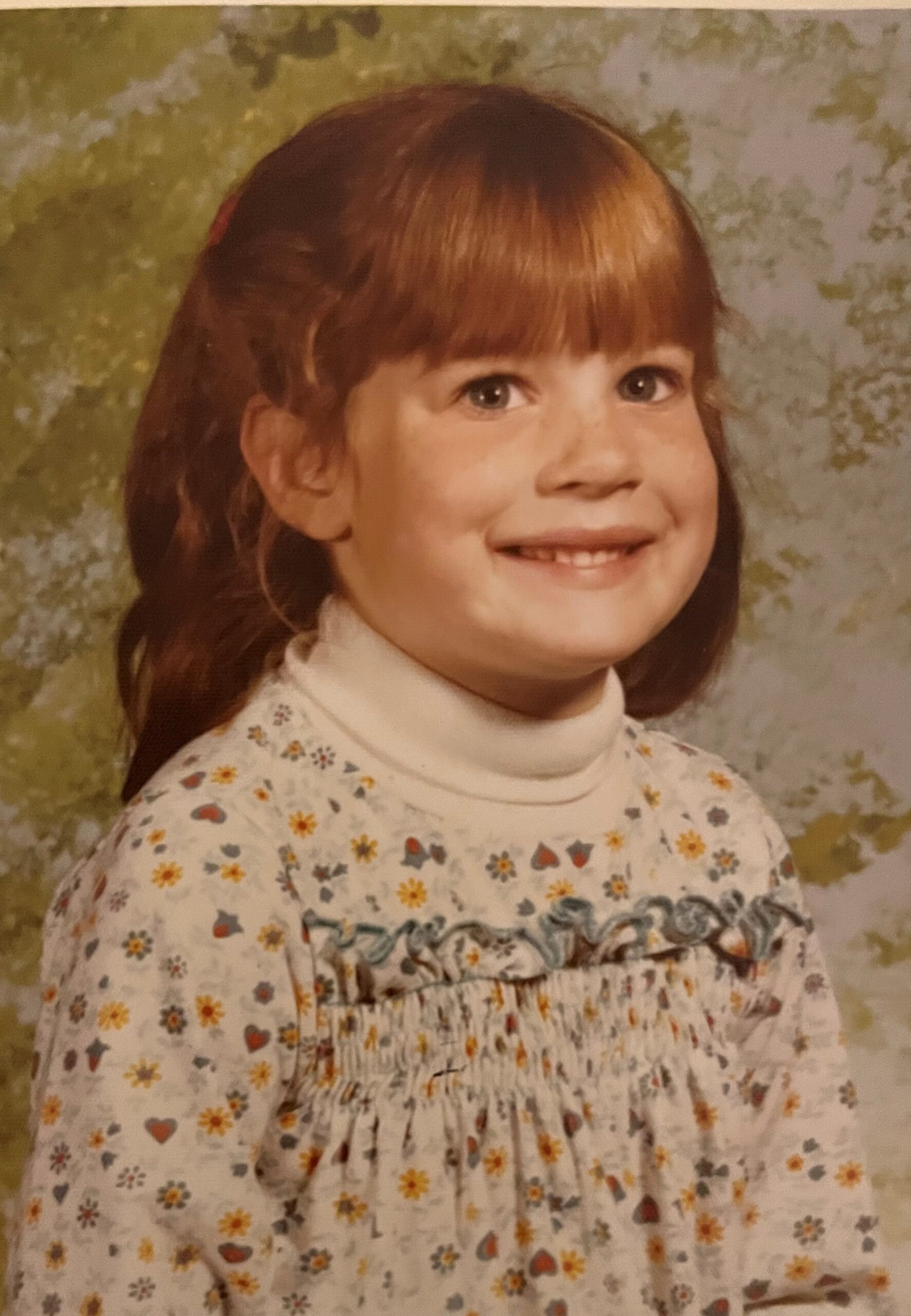
Nancy B. Miller
Nancy B. Miller is a fifty-three year old writer living in Portland, Oregon. She looks forward to calling herself a former corporate lawyer in the future. She can be found on instagram @nancybwrites. Red Lights is her second publication.